Media Playground#
Run:
pnpm playgroundThen open http://127.0.0.1:4173.
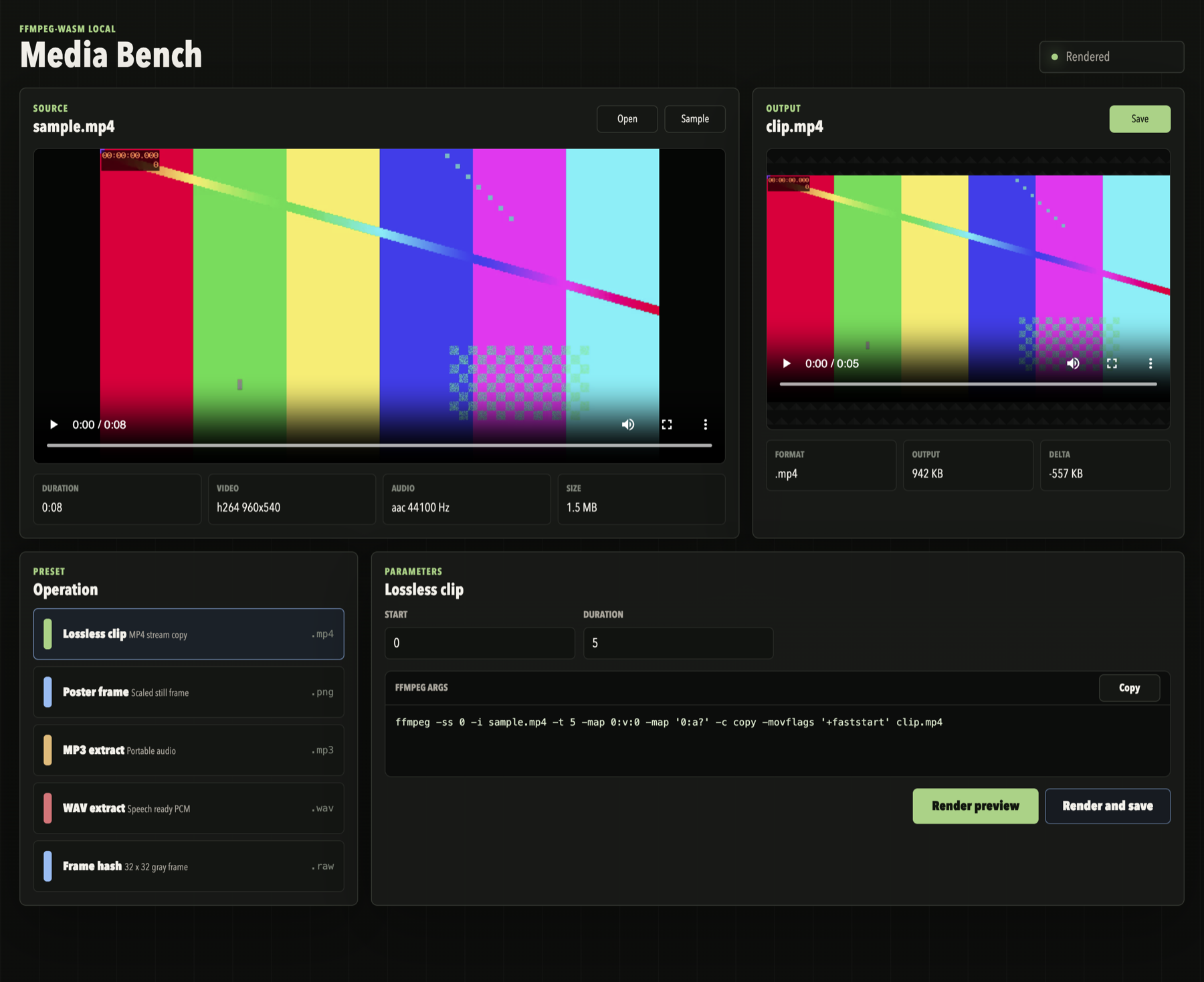
The workbench is a ffmpac test surface. It does not use browser-native media encoders as a substitute; static hosting runs the browser ffmpac bundle in a dedicated worker.
What It Does#
- Opens local video or audio files.
- Generates a sample MP4 when native
ffmpegis installed. - Probes duration, codec, audio, and size.
- Shows FFmpeg args before rendering.
- Renders through this package's wasm wrapper.
- Runs without a server backend when hosted with cross-origin isolation headers.
- Offers a smaller-video preset with output width and quality controls.
- Previews video, image, audio, or raw output inline.
- Saves through the browser file picker when available, with a download fallback.
- Uses the source video's scrubber as a poster-frame picker when you seek.
Presets#
- Lossless MP4 clip.
- Smaller MP4 video.
- Poster PNG.
- MP3 extract.
- WAV extract.
- 32 x 32 grayscale raw frame.
MP3 extract is a normal ffmpac render path using the bundled LAME encoder.
Smaller MP4 video downscales with FFmpeg's native MPEG-4 encoder. The quality menu maps to -q:v, where Small uses a higher quantizer and High uses a lower quantizer.
Local Safety#
The playground server binds to 127.0.0.1 and protects render APIs with a per-server request token embedded into the served page. Cross-origin pages cannot trigger uploads or FFmpeg work without that token.
The browser client and ffmpac worker are written in TypeScript and compiled by pnpm compile, so tsgo, oxlint, and oxfmt cover the workbench code.